In today’s digital landscape, website speed is no longer just a technical feature. It directly impacts search engine visibility, user experience, conversion rates, and overall business growth. With Google continuing to prioritize performance signals, choosing Fast WordPress Hosting has become one of the most important decisions website owners can make.
Many website owners spend time optimizing images, installing cache plugins, and improving website design, but often overlook the foundation of everything: hosting infrastructure.
Even the most optimized WordPress website can struggle with poor performance if the underlying hosting environment is slow.
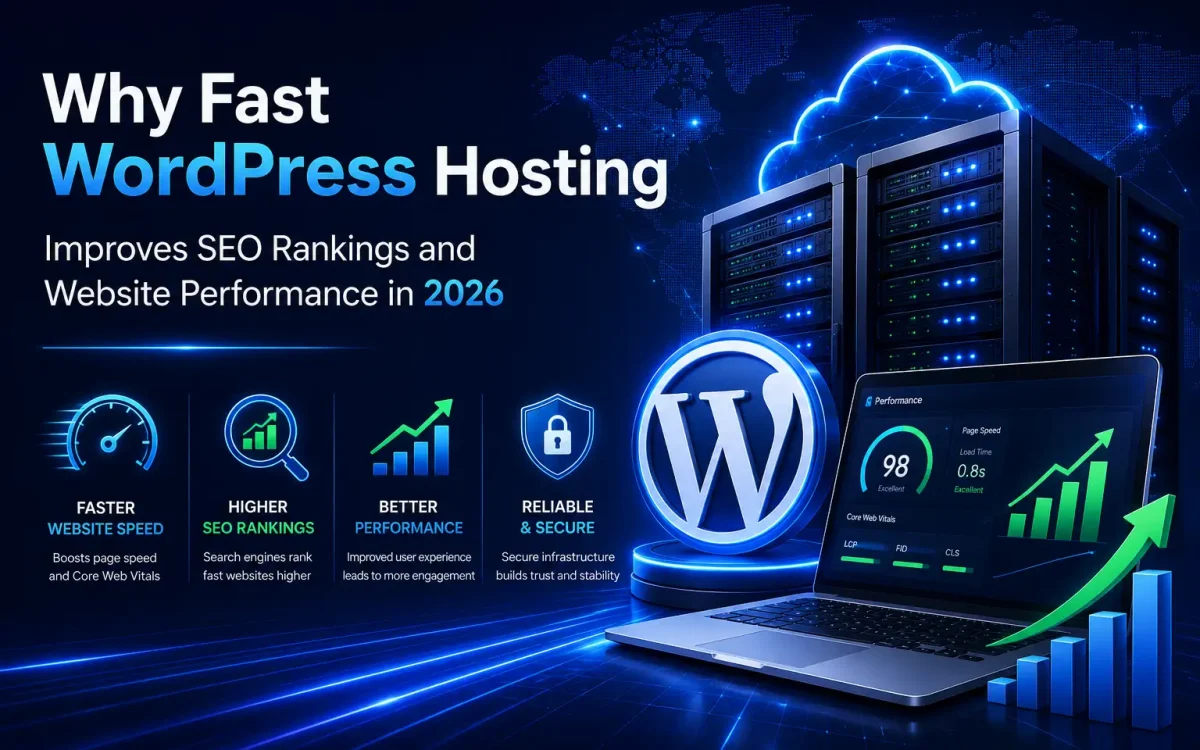
In this guide, we will explain why Fast WordPress Hosting has become critical in 2026, how it affects WordPress Performance, and why hosting speed can directly influence WordPress SEO.
Why Website Speed Matters More Than Ever
Modern internet users expect websites to load almost instantly.
Studies consistently show that users tend to leave websites that load slowly. Every second of delay can impact:
- User engagement
- Conversion rates
- Revenue
- Customer retention
- Search rankings
Website speed affects nearly every part of online performance.
Slow websites often experience:
- Higher bounce rates
- Lower session duration
- Reduced page views
- Lower conversions
- Poor customer experience
Fast websites generally deliver better overall results.
How Fast WordPress Hosting Affects WordPress Performance
WordPress is a dynamic platform that continuously processes information behind the scenes.
Every page load may involve:
- Database queries
- PHP processing
- Plugin execution
- Theme loading
- User sessions
- API requests
- Image processing
- WooCommerce functions
Without optimized infrastructure, these operations create delays.
WordPress Performance depends heavily on:
Processing Power
Modern CPUs help process:
- Dynamic content
- Background tasks
- Database operations
- Plugin requests
Higher processing capability allows websites to respond faster.
Storage Performance
Storage technology plays a major role in website responsiveness.
Modern Fast WordPress Hosting environments typically use enterprise NVMe storage because it offers:
✓ Lower latency
✓ Faster database access
✓ High IOPS performance
✓ Improved application responsiveness
Compared to older storage systems, NVMe significantly improves website speed.
Memory Performance
RAM directly affects:
- PHP execution
- Query processing
- Cache systems
- Website responsiveness
Modern memory architectures help improve performance consistency under heavy workloads.
Why Database Speed Impacts WordPress Performance
Database operations are one of the most important parts of WordPress.
Every website action can generate multiple database requests.
Examples include:
- Loading articles
- User login sessions
- Product searches
- WooCommerce checkouts
- Plugin settings
- Customer information
Slow database environments become major bottlenecks.
Fast hosting environments improve:
✓ Faster page generation
✓ Better admin dashboard responsiveness
✓ Faster WooCommerce stores
✓ Improved user experience
Fast WordPress Hosting and WordPress SEO
Google increasingly uses user experience and performance metrics when ranking websites.
This means WordPress SEO is no longer based solely on content and backlinks.
Performance signals now influence rankings significantly.
Important factors include:
Core Web Vitals
Google evaluates:
- Largest Contentful Paint (LCP)
- First Input Delay (FID)
- Interaction responsiveness
- Visual stability
Fast hosting helps improve these metrics.
Time To First Byte (TTFB)
TTFB measures how quickly a server responds to requests.
Slow hosting environments increase TTFB and negatively affect:
- User experience
- Search rankings
- Website responsiveness
Fast WordPress Hosting helps reduce server response times.
Mobile Performance
Mobile traffic continues increasing worldwide.
Fast hosting improves:
- Mobile loading speed
- User experience
- Search visibility
How Slow Hosting Can Hurt SEO
Poor hosting environments can negatively affect websites in multiple ways.
Common problems include:
Increased Bounce Rates
Users often leave slow websites quickly.
Google may interpret this as poor user experience.
Lower Crawl Efficiency
Search engines have limited crawl budgets.
Slow websites can reduce crawling efficiency.
Reduced User Engagement
Slow websites often generate:
- Fewer page views
- Shorter sessions
- Lower conversions
Poor Core Web Vitals Scores
Low performance scores may affect rankings over time.
Fast WordPress Hosting for WooCommerce Websites
WooCommerce environments require significantly more resources than standard blogs.
Stores constantly process:
- Product information
- Customer sessions
- Shopping carts
- Inventory systems
- Payment requests
Without optimized hosting, WooCommerce stores may experience:
- Slow product pages
- Delayed checkouts
- Cart update delays
- Reduced conversions
Fast hosting infrastructure helps maintain consistent performance.
Features to Look for in Fast WordPress Hosting
If you are choosing a hosting provider in 2026, important features include:
Enterprise NVMe Storage
Provides:
- Faster read speed
- Faster write speed
- Lower latency
LiteSpeed Web Server
Improves:
- Caching
- PHP execution
- Resource efficiency
HTTP/3 Support
Provides:
- Better connection performance
- Faster loading speeds
Security Systems
Look for:
- Malware protection
- Firewall systems
- Daily backups
- SSL support
Resource Isolation
Technologies like CloudLinux help prevent neighboring websites from affecting performance.
Complete WordPress Hosting Guide
For a deeper guide explaining infrastructure, speed optimization, security, and how to choose the right WordPress hosting environment, you can also read:
Best WordPress Hosting in 2026 – Complete Guide for Speed, Security and Performance
This article explains hosting technologies, database performance, infrastructure components, and how modern WordPress environments improve website speed.
Final Thoughts
Website speed is no longer optional in 2026. Search engines and users both expect fast, responsive websites.
Choosing Fast WordPress Hosting directly affects WordPress Performance, user experience, conversion rates, and WordPress SEO.
As WordPress websites become more demanding, hosting infrastructure built with modern storage technology, optimized databases, fast memory architecture, and performance-focused technologies creates a stronger foundation for long-term growth.
Further Reading
For an authoritative reference on this topic, see WordPress.org — Optimization Documentation.