
Artificial Intelligence is becoming the foundation of modern startups in 2026. From AI chatbots and SaaS platforms to automation systems, AI content generation, image processing, and machine learning applications, startups increasingly depend on scalable AI infrastructure to compete in rapidly growing markets.
One of the most important technical decisions startups now face is choosing between self-hosted AI infrastructure and cloud AI platforms.
This decision directly affects:
- Infrastructure costs
- Scalability
- Security
- Performance
- AI model flexibility
- Long-term profitability
- Data privacy
- Operational control
Some startups prefer cloud AI platforms because they are easy to deploy and require minimal infrastructure management. Others choose self-hosted AI environments to gain more control, lower long-term costs, and build scalable independent AI systems.
In this guide, we compare self-hosted AI vs cloud AI platforms in 2026, including infrastructure requirements, performance differences, cost considerations, scalability, security, and which approach is better for modern AI startups.
What Is Self-Hosted AI?
Self-hosted AI refers to running AI models and infrastructure on servers fully controlled by the business itself.
This infrastructure may include:
- VPS hosting
- Dedicated servers
- GPU servers
- Containerized environments
- Kubernetes clusters
- Private cloud systems
Instead of relying entirely on third-party AI APIs, startups host and manage their own AI environments.
Popular self-hosted AI technologies include:
- Ollama
- Stable Diffusion
- Llama models
- Mistral AI
- DeepSeek
- Open-source LLMs
- Vector databases
Self-hosted AI environments give businesses greater infrastructure independence.
What Are Cloud AI Platforms?
Cloud AI platforms provide AI services through managed APIs and cloud infrastructure.
Popular cloud AI providers include:
Cloud AI systems allow startups to integrate advanced AI models quickly without managing hardware infrastructure.
Most cloud AI platforms offer:
- API access
- Managed GPU infrastructure
- AI inference
- AI model hosting
- Scalable cloud environments
This reduces operational complexity for startups.
Why Startups Must Choose Carefully
The choice between self-hosted AI and cloud AI affects long-term business scalability significantly.
Startups must evaluate:
- Budget limitations
- Infrastructure expertise
- AI workload size
- Privacy requirements
- Traffic expectations
- API costs
- Growth plans
Choosing the wrong infrastructure strategy can create major operational bottlenecks later.
Advantages of Cloud AI Platforms
Cloud AI remains extremely popular because of its simplicity and fast deployment.
Faster Deployment
Cloud AI platforms allow startups to launch quickly.
Developers can integrate AI APIs within hours rather than building full infrastructure environments.
This is especially useful for:
- MVP projects
- Early-stage startups
- Small development teams
- Rapid prototyping
Lower Initial Costs
Cloud AI platforms eliminate the need for:
- GPU server purchases
- Infrastructure setup
- Hardware maintenance
- Network management
This reduces upfront investment requirements.
Managed Infrastructure
Cloud providers manage:
- GPU scaling
- Security updates
- Redundancy
- Networking
- Hardware reliability
This allows startups to focus more on product development.
Easy Scalability
Cloud platforms scale rapidly.
Startups can handle growing workloads without manually upgrading infrastructure.
This is useful for AI SaaS businesses experiencing rapid user growth.
Disadvantages of Cloud AI Platforms
Despite their convenience, cloud AI systems also have important limitations.
Expensive at Scale
Cloud AI APIs become very expensive as usage increases.
High-volume AI applications can generate massive monthly API bills.
This becomes a major issue for:
- AI chat platforms
- AI image generation services
- AI SaaS tools
- Large inference systems
Long-term infrastructure costs may eventually exceed self-hosted alternatives.
Limited Control
Cloud AI platforms restrict infrastructure customization.
Businesses may have limited control over:
- Model optimization
- GPU allocation
- Infrastructure tuning
- Privacy configurations
Data Privacy Concerns
Some businesses cannot send sensitive data to third-party AI providers.
Industries such as:
- Healthcare
- Finance
- Enterprise SaaS
- Government services
often require stricter data control.
Vendor Dependency
Relying entirely on cloud AI providers creates dependency risks.
API pricing changes, usage restrictions, or service outages can directly affect business operations.
Advantages of Self-Hosted AI
Self-hosted AI infrastructure is growing rapidly in popularity.
Full Infrastructure Control
Businesses control:
- AI models
- GPU allocation
- Storage systems
- Networking
- Security policies
This flexibility is highly valuable for advanced AI startups.
Better Long-Term Costs
Although self-hosted AI requires larger initial investment, long-term operational costs can become significantly lower.
This is especially true for startups handling:
- Large AI traffic volumes
- Continuous inference
- AI image generation
- Large-scale APIs
Improved Privacy
Self-hosted infrastructure keeps business data inside private environments.
This improves:
- Compliance
- Data security
- Enterprise trust
- Internal governance
Open-Source AI Flexibility
Self-hosted environments support open-source AI models such as:
- Llama
- DeepSeek
- Mistral
- Stable Diffusion
Businesses can customize these models freely.
Challenges of Self-Hosted AI
Self-hosted AI also introduces operational complexity.
Infrastructure Costs
Running AI infrastructure requires:
- GPU servers
- High RAM systems
- Fast NVMe storage
- Enterprise networking
Initial costs can be significant.
Technical Complexity
Managing AI infrastructure requires expertise in:
- Linux systems
- GPU drivers
- Containers
- Networking
- AI optimization
- Security
Small teams may struggle initially.
Hardware Scaling
Scaling self-hosted infrastructure requires:
- Server upgrades
- GPU expansion
- Network planning
- Storage optimization
Cloud AI platforms handle this automatically.
GPU Infrastructure for Self-Hosted AI
Modern AI systems rely heavily on GPU acceleration.
Popular AI GPUs include:
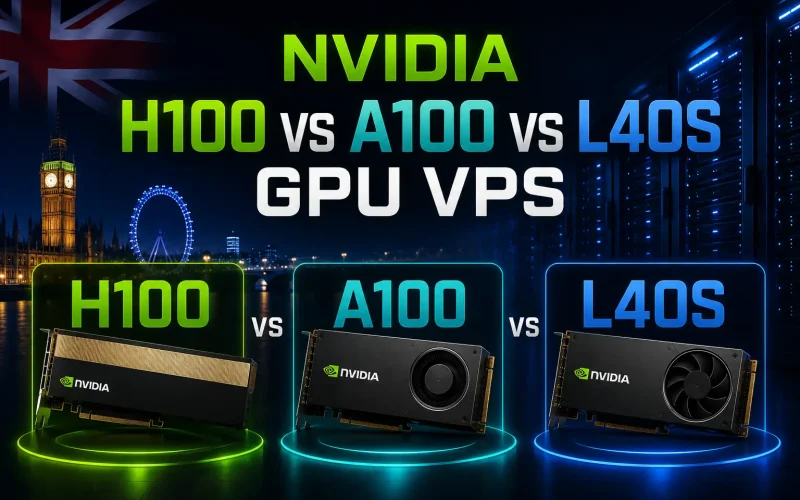
- NVIDIA L4
- NVIDIA A100
- NVIDIA H100
- RTX enterprise GPUs
GPU servers dramatically improve:
- AI inference speed
- Image generation
- Model training
- API responsiveness
Hosting providers like UKSpeed increasingly support scalable high-performance hosting infrastructure suitable for AI workloads and demanding applications.
NVMe Storage and AI Performance
Fast storage is critical for AI systems.
NVMe hosting improves:
- Dataset loading
- Model caching
- AI startup speed
- Database performance
- Vector search systems
AI infrastructure without fast storage quickly becomes bottlenecked.
AI Startups and VPS Hosting
Many startups begin with VPS hosting before scaling into dedicated GPU infrastructure.
VPS environments work well for:
- AI APIs
- Backend systems
- AI dashboards
- Automation workflows
- Databases
- SaaS applications
Scalable VPS infrastructure allows startups to grow gradually.
Containers and AI Infrastructure
Modern AI startups increasingly use:
- Docker
- Kubernetes
- LXC containers
- Incus
- AI microservices
Containerized infrastructure helps businesses:
- Deploy quickly
- Scale efficiently
- Isolate workloads
- Automate updates
This is especially important for AI SaaS platforms.
AI SaaS Platforms and Infrastructure Strategy
AI SaaS businesses often use hybrid approaches.
For example:
- Cloud AI for rapid scaling
- Self-hosted inference for high-volume workloads
- Dedicated GPU servers for image generation
- VPS infrastructure for APIs
Hybrid infrastructure strategies are becoming increasingly common.
Which Is Better for Startups in 2026?
The answer depends heavily on business goals and technical requirements.
Cloud AI Is Better For
- Early-stage startups
- MVP development
- Small teams
- Rapid deployment
- Limited infrastructure expertise
Self-Hosted AI Is Better For
- High-volume AI applications
- Privacy-sensitive businesses
- AI SaaS platforms
- Long-term scalability
- Infrastructure optimization
- GPU-intensive workloads
Many successful startups eventually move toward partially self-hosted infrastructure as they scale.
Future Trends in AI Hosting
Several trends are shaping AI infrastructure in 2026.
Self-Hosted LLM Growth
More businesses are adopting open-source LLMs.
GPU Virtualization
GPU sharing technologies are improving infrastructure efficiency.
AI Edge Infrastructure
Low-latency AI systems are becoming more important.
Hybrid AI Environments
Many startups combine cloud AI with self-hosted systems.
Why Infrastructure Matters for AI Startups
AI performance depends heavily on infrastructure quality.
Businesses require:
- Fast networking
- NVMe storage
- GPU acceleration
- Scalable VPS systems
- Reliable uptime
Poor infrastructure creates:
- Slow AI responses
- API instability
- High latency
- Customer dissatisfaction
Modern hosting providers increasingly support AI-ready infrastructure environments.
UKSpeed provides scalable hosting solutions suitable for AI startups, APIs, automation platforms, and high-performance workloads.
Final Thoughts
The debate between self-hosted AI vs cloud AI platforms is becoming increasingly important for startups in 2026.
Cloud AI platforms provide:
- Simplicity
- Fast deployment
- Lower initial costs
- Easy scalability
Self-hosted AI provides:
- Better long-term economics
- Greater privacy
- Infrastructure control
- Open-source flexibility
- Better scalability for high-volume workloads
Many startups begin with cloud AI systems and gradually migrate toward hybrid or fully self-hosted infrastructure as their platforms grow.
Choosing the right AI infrastructure strategy depends on:
- Budget
- Technical expertise
- Business goals
- AI traffic volume
- Security requirements
Businesses that build scalable AI infrastructure early position themselves for stronger long-term growth and operational independence.