- What Is PCI-DSS?
- Why PCI Compliance Matters for WooCommerce Stores
- Understanding PCI-DSS 4.0 in 2026
- The Importance of Tokenization
- Requirement 9: Monitor and Log Activity
- Requirement 12: Separate Production and Development Environments
- Database Security Best Practices
- How UKSpeed Supports Secure WooCommerce Hosting
- Common PCI Compliance Mistakes
- Conclusion
Introduction
Cybersecurity requirements for online stores continue to become more demanding in 2026. As payment fraud, credential theft, and eCommerce attacks increase, businesses accepting card payments must pay greater attention to payment security standards.
For UK WooCommerce stores, PCI-DSS compliance has become one of the most important security considerations. Whether you operate a small online store, a growing WooCommerce business, or a large eCommerce platform, protecting customer payment information is critical for maintaining trust, reducing fraud, and meeting industry requirements.
Many store owners assume PCI compliance only affects banks and payment processors. In reality, any business that processes, stores, transmits, or handles payment card data falls within the scope of PCI-DSS requirements.
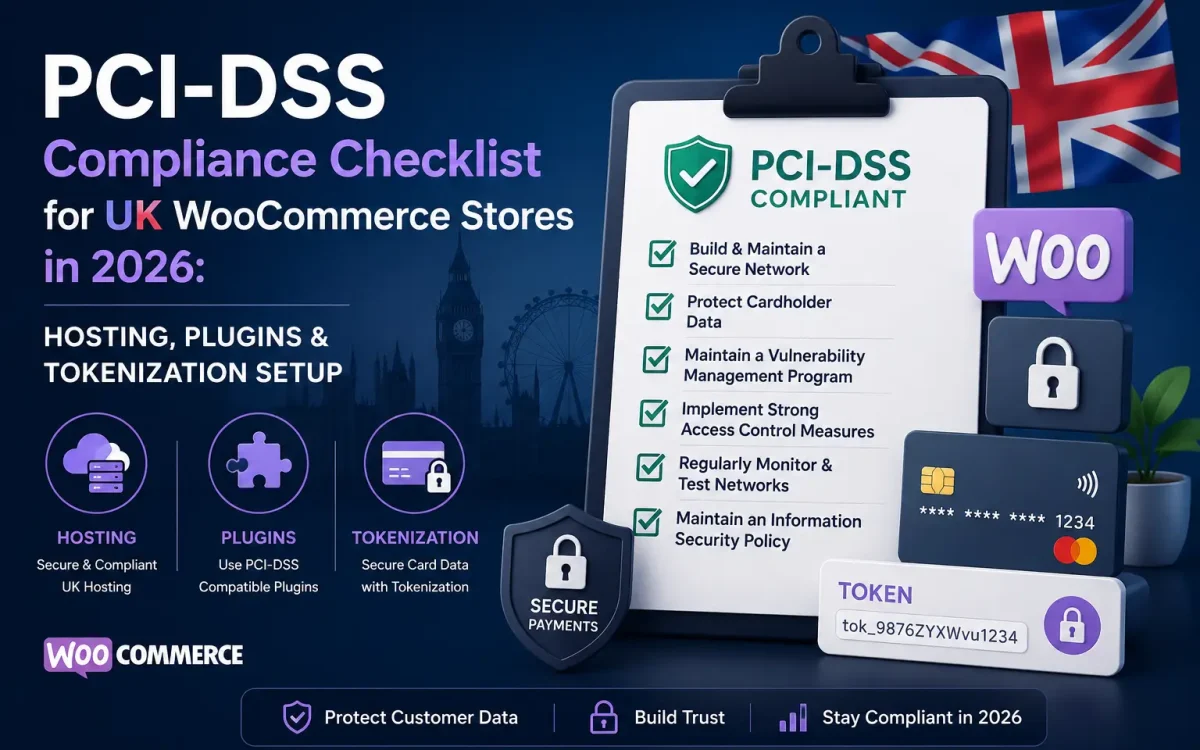
This guide explains PCI-DSS requirements for WooCommerce stores in 2026 and provides a practical compliance checklist covering hosting, plugins, tokenization, security controls, and infrastructure.
What Is PCI-DSS?
PCI-DSS stands for Payment Card Industry Data Security Standard.
It was developed by major payment brands to establish security requirements for organizations handling payment card data.
The standard applies to:
- Online stores
- Retail businesses
- Payment processors
- Service providers
- eCommerce platforms
The primary objective is to protect:
- Cardholder data
- Payment information
- Authentication information
Strong PCI controls reduce the risk of payment fraud and data breaches.
Why PCI Compliance Matters for WooCommerce Stores
WooCommerce powers millions of online stores worldwide.
As businesses process customer payments, they become attractive targets for:
- Credit card theft
- Malware attacks
- Data breaches
- Payment fraud
- Account takeovers
Failure to implement appropriate security controls can lead to:
- Financial losses
- Regulatory issues
- Customer distrust
- Payment processor penalties
- Increased fraud risk
Compliance helps reduce these risks.
Understanding PCI-DSS 4.0 in 2026
PCI-DSS 4.0 introduces stronger security expectations.
Major areas include:
- Multi-factor authentication
- Enhanced access controls
- Continuous monitoring
- Improved vulnerability management
- Security awareness
- Stronger authentication
Businesses should review their environments regularly to ensure compliance.
Does Every WooCommerce Store Need PCI Compliance?
Any business accepting card payments has some level of PCI responsibility.
The level depends on:
- Transaction volume
- Payment method
- Card handling processes
Stores using hosted payment gateways often have reduced compliance obligations.
Stores storing card information directly face significantly greater requirements.
The Importance of Tokenization
Tokenization is one of the most important payment security technologies.
Instead of storing actual card numbers, payment processors generate secure tokens.
Benefits include:
- Reduced PCI scope
- Lower breach risk
- Improved security
- Reduced liability
Modern WooCommerce stores should strongly prefer tokenized payment systems.
How Tokenization Works
The process is simple:
- Customer enters payment details.
- Data is sent directly to the payment provider.
- The provider generates a token.
- The store receives only the token.
- Future transactions use the token.
The merchant never stores sensitive card information.
This dramatically improves security.
Requirement 1: Use PCI-Compliant Payment Gateways
The safest approach is using trusted payment providers.
Examples include:
- Stripe
- PayPal
- Square
- Worldpay
- Opayo
Hosted payment systems significantly reduce compliance complexity.
Direct card storage should generally be avoided.
Requirement 2: Never Store Card Data
WooCommerce stores should never store:
- Card numbers
- CVV codes
- Magnetic stripe data
Removing card storage greatly reduces PCI scope.
Modern payment gateways eliminate the need for local storage.
Requirement 3: Enforce HTTPS Everywhere
Every payment page should use:
- SSL certificates
- TLS encryption
- Secure checkout pages
Customers expect encrypted transactions.
HTTPS protects:
- Login sessions
- Checkout data
- Customer information
SSL certificates have become mandatory for eCommerce stores.
Requirement 4: Use Secure Hosting Infrastructure
Hosting environments directly affect security.
PCI-conscious stores should prioritize:
- VPS hosting
- Dedicated resources
- Secure infrastructure
- Strong isolation
Poor shared hosting environments may increase risk.
Infrastructure security remains a critical component.
Requirement 5: Implement Web Application Firewalls
Web Application Firewalls help block:
- SQL injection attacks
- Cross-site scripting
- Bot attacks
- Malicious requests
Security layers reduce exposure.
Many businesses deploy:
- Cloud firewalls
- Application firewalls
- Security plugins
These protections support PCI objectives.
Requirement 6: Keep Software Updated
Outdated software remains one of the leading causes of breaches.
Update regularly:
- WordPress
- WooCommerce
- Plugins
- Themes
- PHP versions
Security updates reduce vulnerabilities.
Maintenance should become part of operational procedures.
Requirement 7: Limit Administrative Access
Only authorized personnel should access:
- WordPress admin
- Hosting panels
- Databases
- SSH access
Recommended practices include:
- Role-based access
- Strong passwords
- Multi-factor authentication
Limiting access reduces risk.
Requirement 8: Enable Multi-Factor Authentication
MFA has become essential.
Protect:
- WordPress administrators
- Hosting control panels
- Payment accounts
Compromised credentials remain a major threat.
Additional authentication layers improve security.
Requirement 9: Monitor and Log Activity
Security logging helps identify:
- Unauthorized access
- Suspicious behavior
- Failed logins
- Administrative actions
Logs support:
- Investigations
- Audits
- Incident response
Monitoring should be continuous.
Requirement 10: Conduct Vulnerability Scanning
Regular scanning identifies:
- Outdated software
- Security weaknesses
- Known vulnerabilities
Recommended practices include:
- Security plugins
- External scanning
- Vulnerability assessments
Early detection prevents larger incidents.
Requirement 11: Secure Backups
Backups often contain:
- Customer information
- Order history
- Account data
Protect backups through:
- Encryption
- Access controls
- Secure storage
Compromised backups create additional risk.
Requirement 12: Separate Production and Development Environments
Testing environments should remain isolated.
Benefits include:
- Reduced exposure
- Safer updates
- Better testing
Production stores should not be used for development work.
Recommended WooCommerce Security Plugins
Useful security tools include:
Security Plugins
- Wordfence
- Solid Security
- Patchstack
Firewall Solutions
- Cloudflare
- Sucuri
Login Protection
- Two-factor authentication plugins
- Login protection tools
These tools complement PCI requirements.
Hosting Considerations for PCI-Conscious Stores
Secure hosting environments should provide:
- Dedicated resources
- Modern operating systems
- Regular updates
- Network protection
- Monitoring capabilities
Performance and security often go hand in hand.
Why VPS Hosting Improves Security
VPS environments offer:
- Isolation
- Greater control
- Better resource allocation
- Improved security
Many growing WooCommerce stores migrate from shared hosting to VPS environments as security requirements increase.
The Role of DDoS Protection
Service availability matters.
DDoS attacks can:
- Interrupt transactions
- Affect customer trust
- Disrupt operations
Protection mechanisms help maintain uptime.
Reliable infrastructure supports business continuity.
Database Security Best Practices
Protect databases through:
- Strong passwords
- Limited access
- Encrypted connections
- Regular updates
Databases often contain sensitive customer information.
Why UK-Based Hosting Matters
UK businesses frequently prefer local infrastructure because it provides:
- Lower latency
- Faster support
- Regulatory familiarity
- Better customer experience
Local hosting environments simplify operations for many businesses.
How UKSpeed Supports Secure WooCommerce Hosting
Modern WooCommerce stores require hosting environments capable of supporting both performance and security objectives.
UKSpeed infrastructure provides:
- UK-based VPS hosting
- High-performance NVMe storage
- DDoS protection
- High availability
- Secure networking
- Dedicated resources
These capabilities help businesses create reliable eCommerce environments capable of supporting modern security requirements.
Common PCI Compliance Mistakes
Many online stores experience problems because they:
- Use outdated plugins
- Ignore updates
- Share administrator accounts
- Disable security protections
- Store sensitive data unnecessarily
- Lack monitoring
Regular reviews help reduce these risks.
Future Trends for Payment Security
Payment security continues evolving.
Emerging trends include:
- Expanded tokenization
- Stronger authentication
- Behavioral security
- Fraud detection
- Continuous monitoring
Businesses that invest in security now will be better prepared for future requirements.
Building a Security-First WooCommerce Store
Successful stores combine:
- Secure hosting
- Strong authentication
- Reliable payment gateways
- Monitoring
- Updates
- Backups
Security should become part of everyday operations rather than a one-time project.
Conclusion
PCI-DSS compliance for WooCommerce stores extends far beyond payment gateways. Hosting infrastructure, access controls, software updates, tokenization, monitoring, backups, and security practices all contribute to reducing risk.
By implementing secure payment systems, avoiding local card storage, maintaining strong hosting environments, and following modern security practices, UK WooCommerce stores can improve customer trust and reduce their exposure to payment-related threats.
In 2026, security is no longer simply a technical requirement—it is an essential component of every successful eCommerce business.
Further Reading
For an authoritative reference on this topic, see Cloudflare Learning — What Is Web Hosting.
Looking for fast, secure hosting?
Visit UK Speed for cloud servers, VPS NVMe, and dedicated hosting tailored for performance.